Your digital press has been running for six hours. Fifty different label designs, each with its own finishing requirements: spot varnish on this one, cold foil on that one, a different die-cut shape for every SKU. You walk toward your finishing station—and realize that the finishing bottleneck is now controlling your entire turnaround time.
The question is no longer whether to add digital finishing capability. The question is which kind of architecture will unlock your production throughput without locking you into a configuration that cannot adapt six months from now.
This guide walks through the architectural trade-offs between a fully modular converting platform and an integrated finishing line. By the end, you will have a practical framework that ties the choice directly to your order structure, embellishment mix, and investment horizon—not to abstract marketing language.
Both PLUS-330 and TOP-330-PLUS-2 perform label finishing—die cutting, varnishing, slitting, embellishment. But they achieve this through fundamentally different mechanical and architectural approaches.
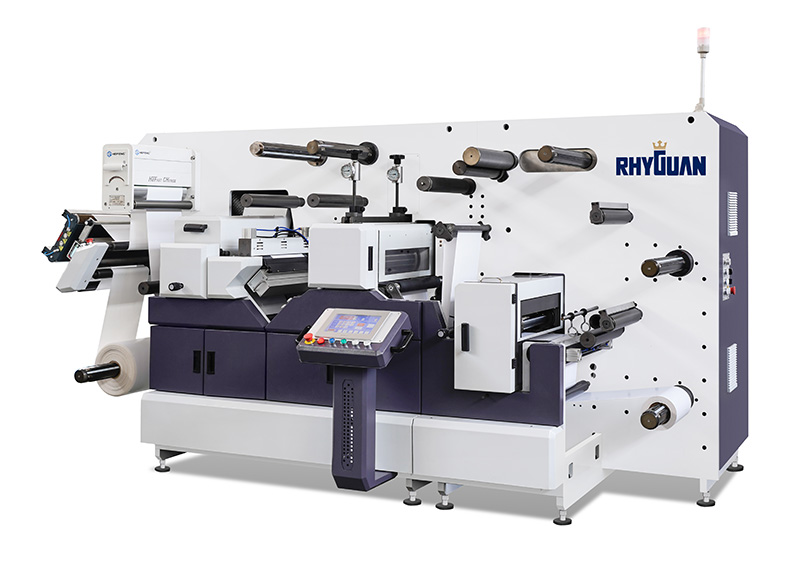
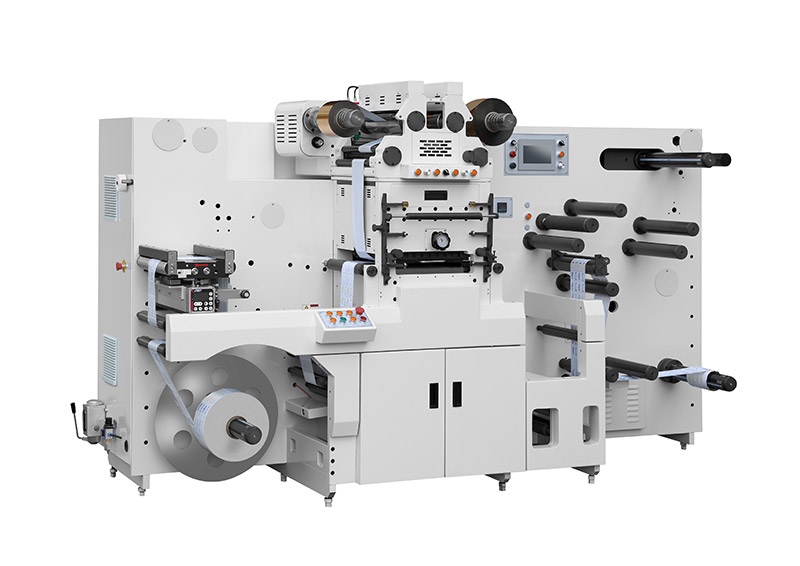
PLUS-330: The Modular Platform. The PLUS-330/420 systems are modular in design, so that each machine can be tailored to meet your specific needs. Nearly all modules can be combined, and it is possible to fit multiple flexo, screen, or die-cut modules into one machine. Each module operates with independent tension control and an independent step-and-repeat function with a sensor for re-registration. This means you start with a baseline configuration and add finishing units—screen printing, hot stamping, flexo, die cutting, slitting—as your business demands them. If a new embellishment technique becomes profitable next year, you add that module rather than replacing the entire machine.
(https://youtu.be/H1kvcxq3K3k?si=_wZQaFHVElitOfPg)
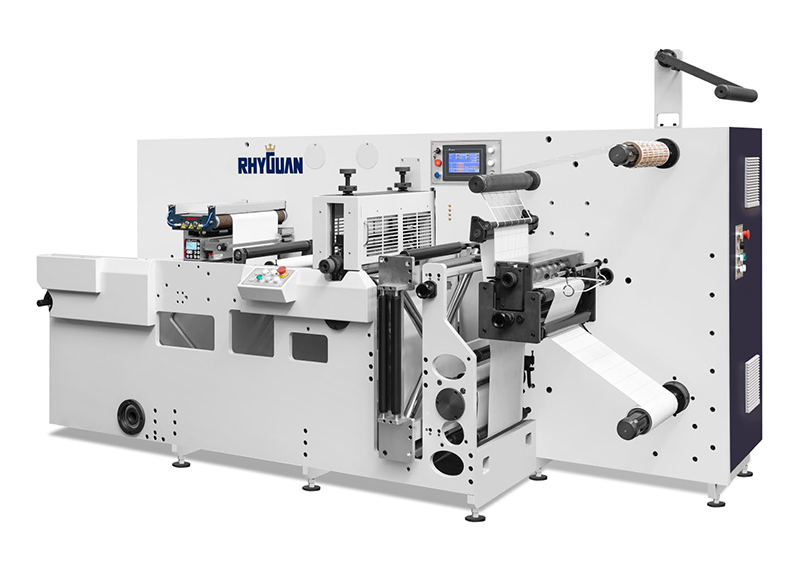
TOP-330-PLUS-2: The Integrated Workcell. The TOP-330-PLUS-2 is designed as a cost-efficient, high-quality converting and finishing solution that combines multiple processes into a streamlined single machine. It features semi/full flexo printing plus semi/full rotary die cutting in one integrated unit. Cold foiling, super varnishing, and IML systems are built into the architecture rather than added as independent modules. The machine is fully servo driven with synchronized control across all servo engines, providing precision timings and accurate step-and-repeats.
(https://youtu.be/1ZE-UptVy_U?si=e2fZF72X0zMcKYOy)
Why this distinction matters for your daily operation: The modular PLUS architecture allows you to pay for capability only when you need it, but requires more upfront planning about which modules to install and how to sequence them. The integrated TOP-PLUS architecture gives you a turnkey finishing cell that handles the most common embellishment tasks out of the box, but with less room to reconfigure for entirely new processes later.
For label converters running digital presses with high order variability, understanding how modular platforms handle multi-process inline finishing is a critical first step. See how modular digital finishing lines are configured for wine label converters and specialty applications.
The choice comes down to how each architecture performs across four production dimensions:
| Finishing Capability | PLUS-330 | TOP-330-PLUS-2 |
|---|---|---|
| Flexo printing/varnishing | Yes | Yes |
| Spot varnish | Yes | Yes |
| Hot stamping | Yes | No |
| Cold foil | Yes | Yes |
| Silk screen printing | Yes | No |
| Semi-rotary die cutting | Yes | Yes |
| Full-rotary die cutting | Yes | Yes |
| IML (in-mold label) die cutting | Optional | Yes |
| Laser die cutting | Yes | No |
| Sheeting / cross cutting | Optional | Yes |
The modular PLUS platform supports a significantly broader range of finishing techniques—including flatbed screen printing, flatbed hot stamping, and laser die cutting—because it is designed to accept different module types. The TOP-330-PLUS-2 focuses on the most common digital label finishing tasks: flexo-based embellishment, cold foiling, and rotary die cutting.
What this means for your daily operation: If your label portfolio requires diverse embellishment techniques—screen-printed tactile effects on wine labels plus hot stamping on luxury cosmetic labels—the modular architecture gives you access to a wider toolkit. If 80% of your work falls into flexo varnish plus die cutting, the integrated machine covers your core needs with fewer configuration decisions.
| Performance Metric | PLUS-330 | TOP-330-PLUS-2 |
|---|---|---|
| Max web width | 330mm | 330mm |
| Full-rotary die cutting speed | 90 m/min | 110 m/min |
| Semi-rotary die cutting speed | 60 m/min | 60 m/min |
| Flatbed hot stamping speed | 120 m/min | N/A |
| Max unwind/rewind diameter | 700mm | 700mm |
| Total motor power | Not specified | 19–21 KW |
Data sources indicate the TOP-330-PLUS-2 achieves a full-rotary die cutting speed of 110 m/min, compared to 90 m/min for the PLUS-330 platform in full-rotary mode. For a 10,000-meter job running in full-rotary mode, this translates to roughly 18% shorter run time on the integrated machine—savings that add up for converters processing high-volume repeat orders.
However, the PLUS platform’s flatbed hot stamping capability runs at 120 m/min, which is significantly faster than what most integrated flexo-based systems can achieve for foil embellishment.
What this means for your daily operation: The integrated TOP-PLUS architecture has a slight edge in pure rotary die cutting throughput. But if your high-volume SKUs require hot stamping rather than cold foil, the modular PLUS platform with its dedicated flatbed stamping module may actually deliver faster overall job completion.
Both machines are fully servo driven, which delivers meaningful operational benefits. Servo-driven independent tension control and auto pre-positioning for registration significantly reduce setup time between jobs.
The key difference lies in semi-rotary capability. Both machines support semi-rotary mode, which allows a single magnetic cylinder to handle variable repeat lengths by reversing the material after each cut. For short-run label converters producing 50 different SKU shapes per week, semi-rotary eliminates the need to purchase dedicated magnetic cylinders for each repeat size.
The TOP-330-PLUS-2 is explicitly positioned as suitable for both short and medium run digital jobs, with semi-rotary mode as a core differentiator for converters who need to minimize tooling inventory. The PLUS platform, while also supporting semi-rotary die cutting, places greater emphasis on its ability to accommodate multiple specialized modules for converters whose finishing needs extend beyond standard rotary work.
What this means for your tooling budget: For a shop running 200 different label designs per year with average runs of 3,000–5,000 meters, the semi-rotary capability on either machine will save tens of thousands of dollars annually in magnetic cylinder costs compared to a full-rotary-only system.
The modular PLUS platform follows a pay-as-you-grow investment model. You purchase the core unwinder/rewinder infrastructure and add finishing modules as your business demands them. If you currently have no screen printing contracts but expect to win some in the next 18 months, you can install the screen printing module later rather than paying for unused capability today.
The integrated TOP-PLUS architecture follows a different logic: you pay for a complete finishing workcell upfront that handles the majority of common digital label requirements. This approach typically has a lower per-unit acquisition cost when measured against the equivalent capability set purchased module-by-module on a modular platform, because integration reduces component redundancy and engineering overhead.
Instead of comparing spec sheets, look at your order book. Here is how each architecture maps to real-world label converter profiles:
Your work features tactile screen-printed textures, premium hot stamping, intricate die-cut shapes, and relatively stable but high-value run lengths. You need to differentiate through embellishment variety, not just speed.
Best fit: Modular PLUS platform.
Why: Flatbed screen printing, flatbed hot stamping, and the ability to combine multiple embellishment techniques in one pass are core to wine and specialty labels. The modular architecture gives you access to finishing methods that integrated flexo-based systems cannot replicate.
You run a digital press feeding 50–200 different label SKUs per week, mostly self-adhesive and film labels. Your finishing requirements are consistent: semi-rotary die cutting, spot varnish, occasional cold foil. Speed and changeover efficiency matter more than exotic embellishment options.
Best fit: Integrated TOP-330-PLUS-2.
Why: The machine was explicitly designed for short and medium run digital jobs, with semi-rotary flexo, semi-rotary die cutting, and inspection combined into one streamlined workcell. You get the essential finishing capabilities without the complexity of managing multiple independent modules.
Today you produce basic cut-and-stack labels. Next year you plan to add cold foil contracts. In two years, you expect to move into in-mold labels or laser-cut specialty shapes. You cannot predict your finishing mix three years out.
Best fit: Modular PLUS platform.
Why: The ability to add modules—cold foil, screen printing, hot stamping, laser die cutting—as your business evolves protects your initial investment from obsolescence. You pay for capability only when revenue justifies it.
Your core business is in-mold labels for rigid packaging. You need a dedicated finishing solution optimized for IML die cutting with high precision and reliable material handling for film substrates.
Best fit: Integrated TOP-330-PLUS-2.
Why: The machine includes a purpose-built IML die-cutting system with static elimination and counter controls, specifically designed for the unique requirements of in-mold label production.
The label industry has moved decisively from long-run dominance to a short-run, multi-SKU mindset. For converters adapting to this shift, the choice between modular and integrated finishing architectures has become one of the most consequential equipment decisions of the decade. Explore label finishing solutions configured for specific industry applications.
The global label market reached approximately 76 billion square meters in 2025, a 2.8 percent increase over the prior year. According to FINAT’s Q3 2025 Radar report, label converters and suppliers are planning for 2026 by embracing complexity—managing cost volatility, diversifying supply chains, and investing in automation.
This broader industry context reinforces why the modular-versus-integrated decision matters. Converters are increasingly prioritizing automation and digital infrastructure in their capital investment plans. Digitalized workflows enable shorter runs and faster turnarounds, meeting demand for next-week and even next-day delivery to brands.
A modular finishing platform offers maximum long-term adaptability as automation and embellishment technologies evolve. An integrated finishing line delivers immediate productivity gains for converters whose order profiles have already stabilized around a predictable set of finishing requirements. Neither choice is universally superior—each fits a different production reality.
The finishing architecture you choose today will likely serve your production floor for 5–10 years. During that period, three trends will continue reshaping label finishing:
Digital embellishment growth: Notable trends include increasing adoption of digital embellishments in labels, as brands seek innovative ways to make products stand out on retail shelves.
Short-run acceleration: Brand owners increasingly demand short-run, high-impact label solutions offering personalization and versioning capabilities, making agility a critical converter requirement.
Automation intensity: FINAT reports indicate that innovation in automation is not a luxury but a lever for survival and success in the label industry.
A modular platform can adapt to these trends by adding new module types as they become available—digital varnish heads, advanced inspection systems, or new die-cutting technologies. An integrated workcell may require a full replacement to incorporate entirely new finishing methods, though its streamlined design typically offers higher immediate throughput for the functions it already supports.
The choice between a modular converting platform and an integrated finishing line is not about which design philosophy is inherently superior. It is about aligning your capital investment with your actual order structure, embellishment mix, and business growth trajectory.
Use this three-question filter before your next finishing equipment decision:
What finishing methods does your current order book require today? If hot stamping, screen printing, or laser cutting are not in your mix, the integrated machine may cover your needs with lower complexity.
How unpredictable is your future embellishment mix? If you cannot confidently predict your finishing requirements in three years, the modular platform’s upgradeability protects against early obsolescence.
What is your primary production constraint—speed or versatility? If your bottleneck is finishing throughput for high-volume standard jobs, the integrated machine’s higher rotary speed matters. If your challenge is handling diverse embellishment types for short runs, versatility becomes the priority.
Once you have clarified these decision factors, comparing specific equipment configurations becomes the next logical step. For converters running wine labels, specialty cosmetic packaging, or any application requiring screen printing and hot stamping, the PLUS series modular platform provides the widest toolkit. For digital label houses focused on flexo-based embellishment with semi-rotary efficiency, the TOP-330-PLUS-2 integrated finishing line delivers a streamlined, cost-effective workcell. For converters who need to balance both order profiles—high-volume standard SKUs plus specialty short runs—evaluating a mixed approach that incorporates both architectures across multiple production lines may offer the most resilient long-term solution.
For converters who have already clarified their required finishing processes and output targets, evaluating detailed equipment configurations is the logical next step. Review digital finishing solutions designed for specific production scenarios and embellishment requirements.
Modular vs. All-in-One Label Finishing: Which Configuration Delivers Lower Total Cost of Ownership?
Understanding Semi-Rotary Die Cutting: When Variable Repeat Lengths Save Tooling Costs
Five Signs Your Digital Label Workflow Needs Inline Finishing Integration
IML Label Production: Equipment Considerations for In-Mold Label Converters
This article is part of Rhyguan’s technical content library. No direct sales or pricing information is included. All technical discussions aim to help you make informed purchasing decisions.
● Another PLUS-330 Machine Installed in Latin America
● Another Two Installations at Customers’ Site
● Rhyguan Plus Month
● Top security level in Rhyguan
● Another Rotary Die-cutting Installation at Cutsomer’s Site
● Perfect Factory Acceptance Testing for Label Inspection Machines
● New Rhyguan Factory Preview
● Rhyguan Industrial 4.0 Live Presentation
GET A QUOTE