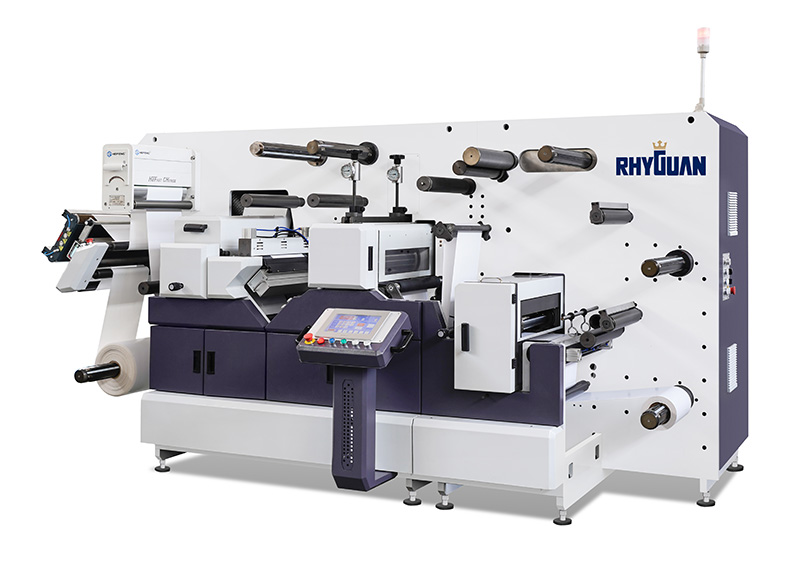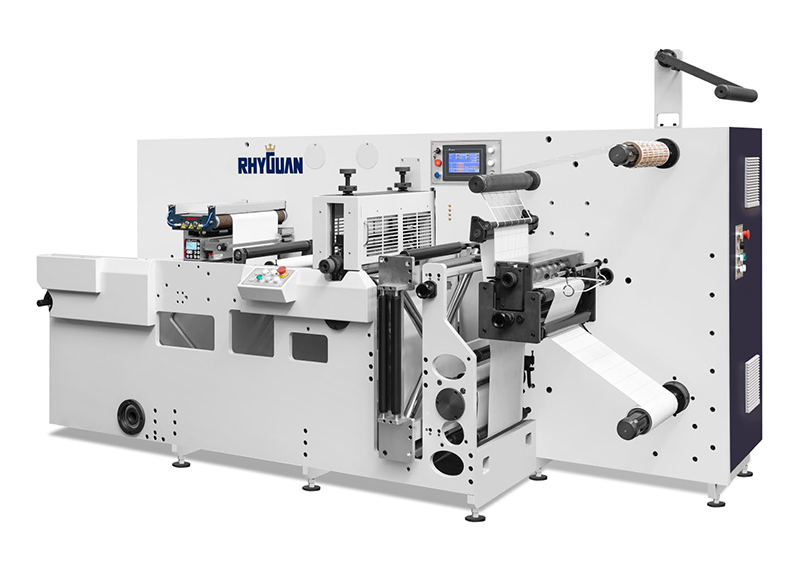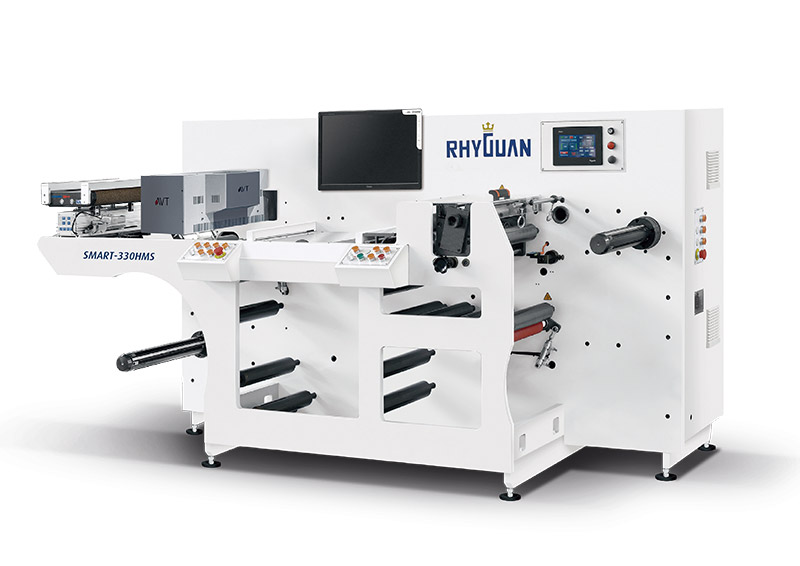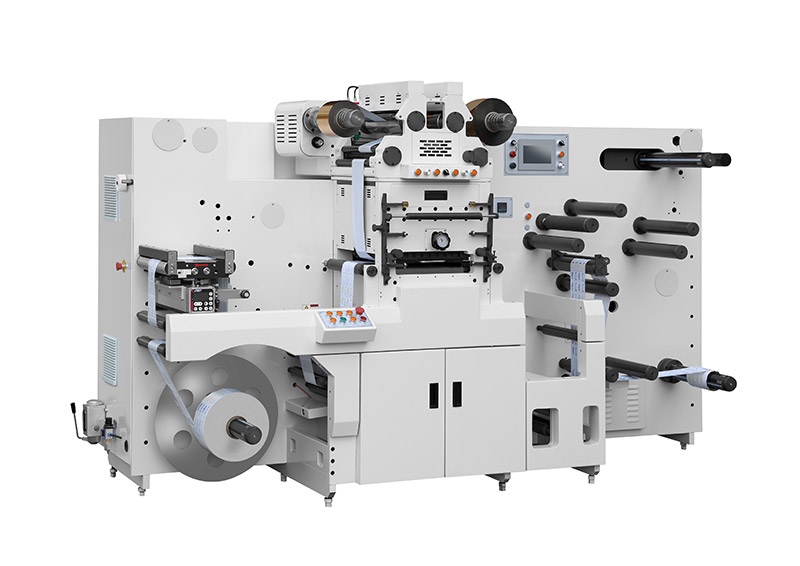
Your digital press runs at full speed. The labels come off the roll beautifully printed—spot colors, variable data, everything perfect. Then they hit the finishing station. And suddenly, the bottleneck shifts.
Fifty different SKUs this week. Each with different embellishment requirements. Some need spot varnish. Others need cold foil. A few require screen-printed tactile effects. Your finishing line can handle all of them—but not without changeovers that eat into your margins.
The question is no longer whether to invest in digital finishing capability. The question is whether a modular architecture—one that lets you add capabilities over time—makes financial sense compared to buying a fixed-configuration machine upfront.
This guide examines the investment case for modular digital finishing through the lens of payback periods, total cost of ownership, and strategic flexibility. No sales pitches. Just a framework to help you decide.
The label industry is undergoing a structural shift that makes finishing investment decisions more consequential than ever.
Global label production is growing at roughly 4–6% annually, while short-run digital segments are expanding at an even faster pace. According to Smithers, the global market for digitally printed packaging and labels reached $22.0 billion in 2025, accounting for 4.1% of all printed packaging, with that share forecast to climb to 5.8%. Digital label press installations are accelerating—over 8,100 narrow-web digital presses are now in operation worldwide, with nearly 1,150 new digital label presses sold in 2025 alone.
What does this mean for finishing? Every new digital press produces labels that need to be finished—die-cut, varnished, foiled, slit, and rewound. But the finishing requirements are more diverse than ever. Brand owners increasingly demand short-run, high-impact label solutions with personalization and versioning capabilities. Converters are being asked to handle more SKUs, shorter runs, and more complex embellishment—all while maintaining profitability.
This is the environment in which the modular finishing investment decision must be made.
For converters already running digital presses with high order variability, understanding how modular platforms handle multi-process inline finishing is a critical first step. See how modular digital finishing lines are configured for specialty label applications
Before evaluating whether a modular machine is "worth it," it helps to understand what the investment actually covers.
(https://youtu.be/pBCHGuHFiHg?si=FA4j-NDrsiKj7lVJ)
| Cost Component | What It Includes | How Modular Changes the Equation |
|---|---|---|
| Core infrastructure | Unwinders, rewinders, tension control, servo drives, base frame | One-time investment; shared across all future capabilities |
| Finishing modules | Flexo units, screen printing, hot stamping, die cutting, slitting, laser cutting | Purchased only when needed; can be added incrementally |
| Installation & integration | Setup, calibration, operator training | Paid once for core; additional per module |
| Tooling & consumables | Magnetic cylinders, dies, foils, inks | Semi-rotary capability reduces cylinder inventory |
| Maintenance & support | Spare parts, service visits, remote diagnostics | Scales with number of modules installed |
The key distinction is that a modular system allows you to separate infrastructure cost from capability cost. You invest in the core platform once, then add finishing capabilities as your order book demands them. A fixed-configuration machine requires you to pay for all capabilities upfront—including those you may not use for years, or ever.
Return on investment in digital finishing is increasingly understood as a continuous improvement process rather than a single payback event. Throughout 2025, converters have shifted their perspective from short-term cost recovery to long-term value creation and workflow optimization.
That said, payback periods do exist—and they vary significantly based on production volume, job mix, and the specific capabilities being added.
For inline converting systems combining printing, die-cutting, and slitting, most customers see a full return on investment within 12 to 18 months. This payback is driven by a 40–60% reduction in labor costs and significantly lower material waste during job setups.
For modular finishing systems specifically, the payback dynamics are different:
Pay-as-you-grow model: You only pay for modules when revenue justifies them. This means your initial investment is lower than a fixed-configuration machine with equivalent long-term capability.
Module-level ROI: Each module can be evaluated independently. If a screen printing module costs XandgeneratesXandgeneratesY in additional revenue from wine label contracts, you can calculate its specific payback period.
Avoided replacement cost: Perhaps the most overlooked ROI component. When your finishing needs evolve—and they will—a modular system lets you add capabilities rather than replacing the entire machine.
As Rhyguan's export manager noted, the company's modular systems like the PLUS-330/420 are designed as "multi-process and combinable modular machines which enable flexible production scaling". Modularity is positioned not just as a feature but as "scalable investment protection".
A modular finishing machine is not universally the right answer. Its value proposition is strongest for converters with specific order profiles.
You handle 100–200 different label SKUs per week. Finishing requirements vary widely—some need screen-printed textures, others need hot stamping, some are simple die-cut and nothing more. Your order book is unpredictable; you cannot confidently forecast your embellishment mix 18 months out.
Value case for modular: You start with the core platform and the modules you need today. When a new client requires hot stamping, you add that module. When the market shifts toward tactile screen effects, you add screen printing. Your initial investment is lower, and you only pay for capability when revenue justifies it.
Payback dynamic: The payback period for the core infrastructure is typically 12–18 months. Each additional module has its own payback, often shorter because it targets a specific revenue stream.
You focus on a narrow segment—say, wine labels or IML labels. Your finishing requirements are consistent and predictable. You know exactly what capabilities you need, and you need them all from day one.
Value case for modular: Less compelling. A fixed-configuration integrated machine may offer a lower total acquisition cost for the specific capability set you require, because integration reduces component redundancy and engineering overhead.
Payback dynamic: The integrated machine may have a shorter payback period for the specific use case, but it offers less flexibility to adapt if your business diversifies later.
You are expanding your label business into new segments. Today you do basic cut-and-stack labels. Next year you plan to add cold foil contracts. In two years, you expect to move into in-mold labels. You cannot predict your finishing mix three years out.
Value case for modular: Strongest of all. The modular platform protects your initial investment from obsolescence. You pay for capability as you grow, rather than over-investing upfront or under-investing and facing replacement costs later.
Sometimes the best way to evaluate an investment is to consider the alternative.
If you choose a fixed-configuration finishing machine and your business evolves in unexpected directions, you face several costly scenarios:
Premature replacement: Your finishing needs outgrow the machine's capabilities. You sell the machine at a loss and purchase a new one.
Offline finishing: You cannot add the capability inline, so you run certain jobs offline on separate equipment—increasing labor, handling time, and waste.
Rejected work: You cannot produce certain embellishment effects at all, so you turn away profitable work.
These costs are difficult to quantify upfront, but they are real. Converters who have adopted modular systems describe the benefit in operational terms: "Our systems transform rigid production lines into agile, future-proof platforms through on-demand flexibility, zero-waste agility, auto-registration technology, and scalable investment protection".
The investment case for modular finishing is further strengthened by automation features that are increasingly standard on modern platforms.
Rhyguan's modular systems, for example, incorporate:
Closed-loop servo control for precision and stability
Modular auto-registration systems that reduce setup time
24/7 remote diagnostics that stream real-time machine data to technical centers, enabling instant troubleshooting
The impact is measurable. According to Rhyguan, remote diagnostics and predictive fixes can slash downtime by 60%. Energy intelligence features reduce standby energy waste by 40%. AI-powered vision systems detect defects in real-time at speeds of 150m/min, reducing substrate waste by 15%.
These automation features directly affect ROI. Less downtime means more throughput. Less waste means higher material yield. Faster setups mean more jobs per shift.
Instead of asking "Is a modular digital finishing machine worth it?" ask these five questions about your specific operation:
| Question | Why It Matters |
|---|---|
| 1. How many different SKUs do you finish per week? | High SKU counts favor modular flexibility |
| 2. Can you predict your embellishment mix 24 months from now? | Uncertainty favors modular adaptability |
| 3. What is your typical run length per job? | Short runs benefit from faster changeovers |
| 4. How many finishing processes do you currently outsource? | Bringing work in-house improves ROI |
| 5. What is your growth trajectory in new label segments? | Diversification favors modular expansion |
If you answer "high SKU count," "uncertain future mix," "short runs," or "planned diversification," the modular case strengthens. If your answers point toward stable, predictable, narrow-scope production, an integrated machine may be the more cost-effective choice.
Once you have clarified these decision factors—your order structure, embellishment mix, and growth trajectory—comparing specific equipment configurations becomes the next logical step. Review digital finishing solutions designed for specific production scenarios.
The question "Is a modular digital finishing machine worth the investment?" does not have a universal answer. It depends on your order profile, your growth trajectory, and your tolerance for the hidden costs of inflexibility.
What is clear is that the industry is moving toward modularity. The market for automatic post-printing finishing equipment is advancing toward greater connectivity, modular design, and sustainable capabilities. Digital label printing continues to grow at a CAGR of 7–8%. Converters who cannot adapt to shorter runs and more diverse finishing requirements risk losing market share to those who can.
For converters with high SKU counts, unpredictable embellishment mixes, or growth plans into new label segments, a modular digital finishing platform offers:
Lower initial investment: Pay for core infrastructure, add capabilities as revenue justifies them
Protection against obsolescence: Add new modules rather than replacing the entire machine
Faster response to market shifts: Add hot stamping when wine label contracts come in; add screen printing when tactile effects become trendy
Measurable operational savings: 60% less downtime, 40% less standby energy waste, 15% less substrate waste
For converters with stable, predictable finishing requirements, an integrated machine may offer a lower total acquisition cost for the specific capabilities they need.
The key is to evaluate the decision not as a binary "modular vs. not modular" but as a continuum—and to choose the point on that continuum that best fits your actual production reality, not marketing language.
For converters who have already clarified their required finishing processes and output targets, evaluating detailed equipment configurations is the logical next step. Explore digital finishing solutions and their specific capability sets
Modular vs. Integrated Digital Finishing: Which Architecture Fits Your Production Mix?
Understanding Semi-Rotary Die Cutting: When Variable Repeat Lengths Save Tooling Costs
Five Signs Your Label Finishing Line Is Ready for Automation
Calculating Total Cost of Ownership for Label Finishing Equipment
Short-Run Label Production: How Finishing Flexibility Drives Profitability
This article is part of Rhyguan's technical content library. No direct sales or pricing information is included. All technical discussions aim to help you make informed purchasing decisions.
● Another PLUS-330 Machine Installed in Latin America
● Another Two Installations at Customers’ Site
● Rhyguan Plus Month
● Top security level in Rhyguan
● Another Rotary Die-cutting Installation at Cutsomer’s Site
● Perfect Factory Acceptance Testing for Label Inspection Machines
● New Rhyguan Factory Preview
● Rhyguan Industrial 4.0 Live Presentation
GET A QUOTE