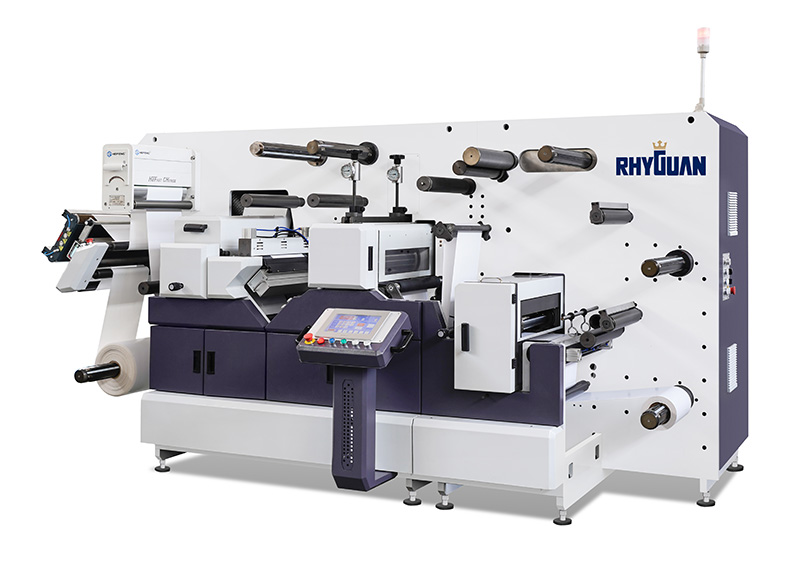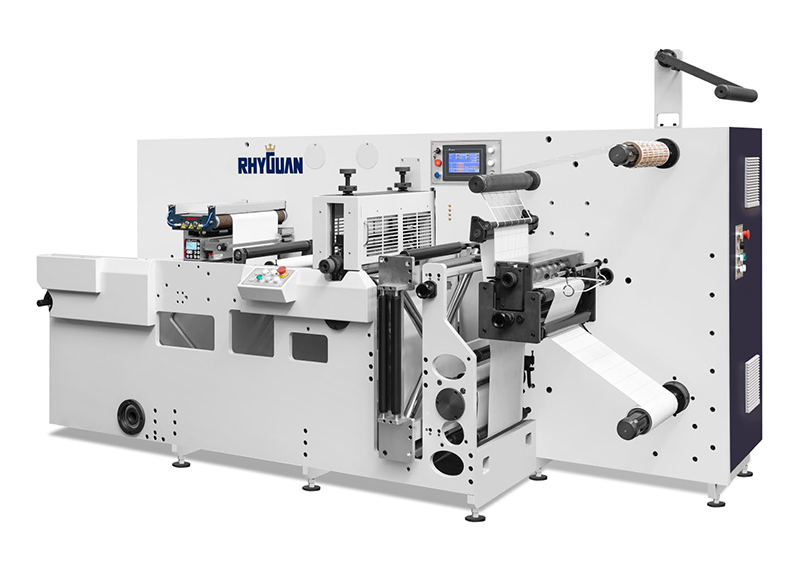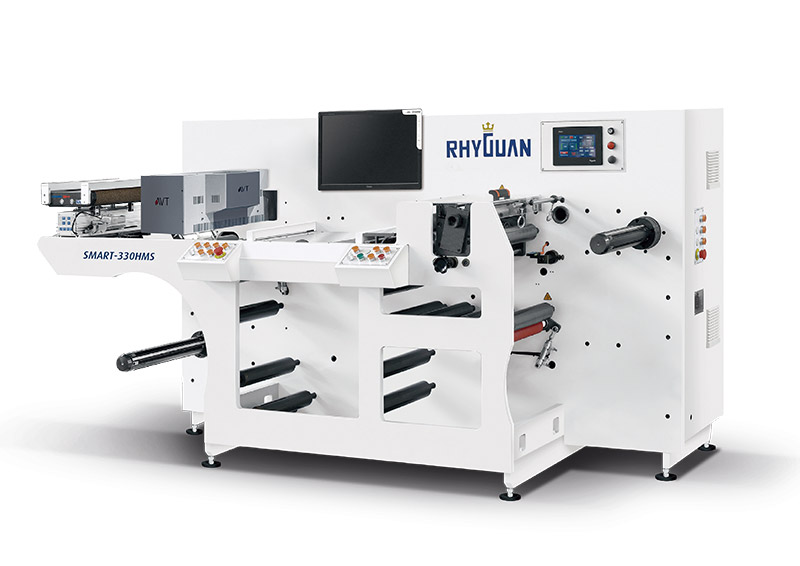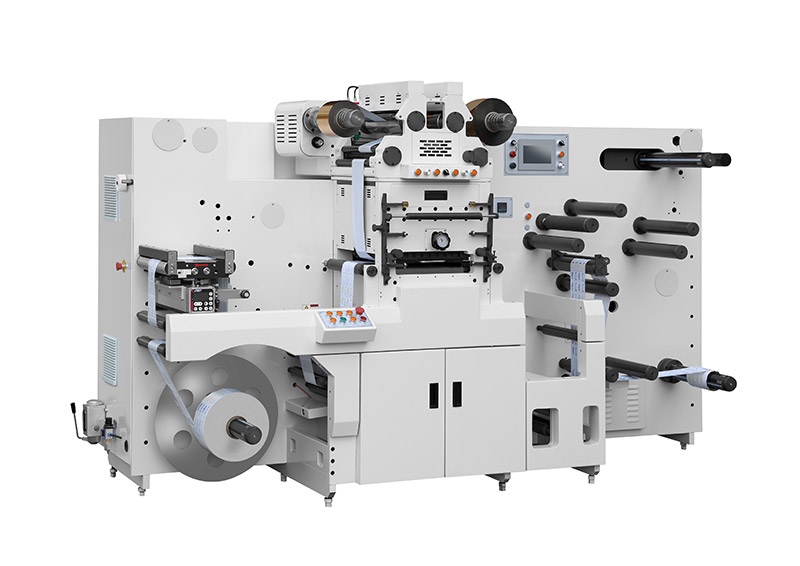
In the field of roll-to-roll material processing, efficiency and quality are paramount. Slitting and rewinding machines are key pieces of equipment that can process wide master rolls into narrower, more customer-specific rolls. This article will explore its core operation, wide applications, and transformative advantages, highlighting how integrated inspection technology enhances its performance.
Slitting and rewinding machines perform three main functions in a continuous processing flow:
1. Unwinding: Loading and feeding a large master roll into the machine.
2. Slitting: The material passes through a slitting station where sharp, precision blades (razor-type, shear-type, or scribing-type) longitudinally cut it into multiple strips of a specified width.
3. Rewinding: Each strip is individually wound onto a new core, creating a neat, compact, and uniform finished roll, ready for packaging, shipping, or further use.
Slitting and rewinding machines have a wide range of applications and are essential equipment in many industrial sectors, including:
Paper and Paperboard Industry: Used for producing packaging paper rolls, label paper rolls, printing paper rolls, and corrugated board rolls.
Plastic Packaging Industry: Capable of high-speed cutting of plastic films for flexible packaging, food packaging films, and plastic bags.
Other Industries: Slitting and rewinding machines are also indispensable in the field of materials supplied in roll form, such as textiles, nonwovens, foils, and composites.
Disruptive Innovation: Inspection-Based Slitting and Rewinding Machines
Standard slitting and rewinding machines focus on dimensional control, but the real advancement lies in integrating quality control directly into the production process. Inspection-based slitting and rewinding machines play a transformative role in this.
Traditional methods often require separate manual inspection or offline sampling, leading to inefficiency, missed defects, and inconsistent quality. Inspection-based slitting and rewinding machines integrate these disparate steps into a smart, automated system.
The Rhyguan Inspection, Slitting, and Rewinding Machine is a prime example of this integrated solution. It's an intelligent post-processing device that seamlessly integrates defect detection, precision slitting, and automatic rewinding. Designed specifically for high-quality roll materials (such as label paper, flexible packaging film, and pharmaceutical packaging film), it directly addresses the inefficiencies and missed detections inherent in manual inspection methods.
Its core innovation lies in achieving full automation of the entire process from the following stages:
Material feeding → Real-time defect identification → Precise slitting → Rewinding of qualified roll materials.
This closed-loop system ensures that only products meeting the highest standards leave the factory, guaranteeing zero defects in finished products.
1. Unparalleled Efficiency and Productivity: Machines like the Rhyguan operate at speeds up to 300 meters per minute, achieving efficiencies up to 5 times that of ordinary manual inspection and processing. This can increase daily roll material handling capacity by more than 50%.
2. 100% Defect Detection and Quality Assurance: The integrated inspection system acts like a vigilant eye. It works with most high-resolution camera systems on the market to identify flaws such as spots, holes, scratches, or printing defects in real time. Defective parts are automatically marked or removed, ensuring that every inch of the finished product is flawless.
3. Extremely Easy to Operate: Advanced technology is easily implemented through a user-friendly interface. The visual touchscreen control panel, combined with one-button start, allows even beginners to master basic operation within 10 minutes. This significantly reduces training costs and reliance on operators.
4. Reduced Waste, Cost Savings: Automated precision slitting minimizes waste of scrap materials, while 100% inspection significantly reduces returns, complaints, and scrap costs caused by undetected defects.
The evolution of slitting and rewinding machines, from basic slitting to intelligent quality assurance, is clearly visible. Standard models are essential for transformation and upgrading, but the inspection, slitting, and rewinding machines represent the future direction of coil post-processing. It combines perfect inspection with high-speed operation and user-friendly controls, offering unparalleled advantages in production efficiency, quality control, and ease of operation, making it an indispensable asset for any processor striving for excellence in today's highly competitive market.
● Another PLUS-330 Machine Installed in Latin America
● Another Two Installations at Customers’ Site
● Rhyguan Plus Month
● Top security level in Rhyguan
● Another Rotary Die-cutting Installation at Cutsomer’s Site
● Perfect Factory Acceptance Testing for Label Inspection Machines
● New Rhyguan Factory Preview
● Rhyguan Industrial 4.0 Live Presentation
GET A QUOTE