In the highly competitive global precision mold manufacturing industry, choosing the right machining equipment directly determines your project’s lead time, dimensional accuracy, mold service life, and overall production cost.
Two of the most widely used core equipment in modern mold fabrication are the laser mold cutter and the CNC digital mold cutter (also known as CNC mold milling machine). Many manufacturers – especially those new to mold development, small batch customization factories, and cross-border product R&D teams – often struggle to distinguish between the two. Picking the wrong tool frequently leads to defective parts, delayed delivery, unnecessary material waste, and even irreversible damage to high-value mold materials.
In this guide, we break down their fundamental working principles, head-to-head performance differences, unique strengths and limitations, and give you clear, actionable advice on which tool fits your specific mold project perfectly.
The core gap between the two devices comes down to their completely different machining principles – this is the root cause of all their differences in application scenarios, precision, and efficiency.
Laser Mold Cutter: It works like an invisible high-temperature light knife. It uses a focused high-energy laser beam to generate instant high temperatures of tens of thousands of degrees, melting and vaporizing the mold material to complete cutting and engraving. The entire process is non-contact thermal machining, with no physical contact between the machining head and the workpiece.
CNC Digital Mold Cutter: It works like a computer-controlled precision milling knife. Driven by a digital CNC system, the solid cutting tool rotates at high speed to physically remove excess material from the workpiece. The entire process is contact mechanical cold machining, with continuous hard contact between the tool and the workpiece.
We compare the two devices around the core pain points of mold manufacturing, to help you quickly identify their positioning:
The material adaptability directly determines whether the equipment can match your project’s raw material needs.
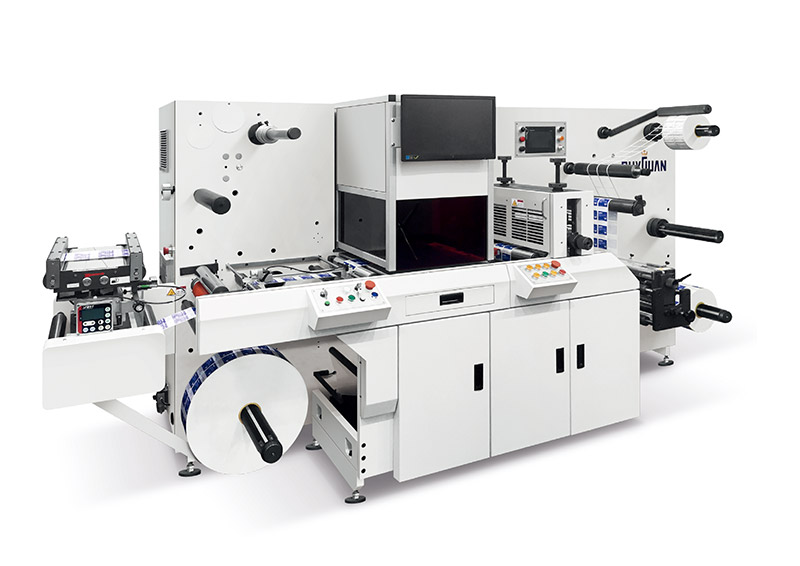
Laser Mold Cutter: Has extremely wide material compatibility. It can handle both metal materials commonly used in molds (mold steel, stainless steel, alloy steel) and non-metal mold materials (acrylic, wood mold, foam lost foam, silicone, epoxy resin). However, it has obvious limitations in processing highly reflective materials such as red copper and aluminum alloy, with poor effect and high energy loss.
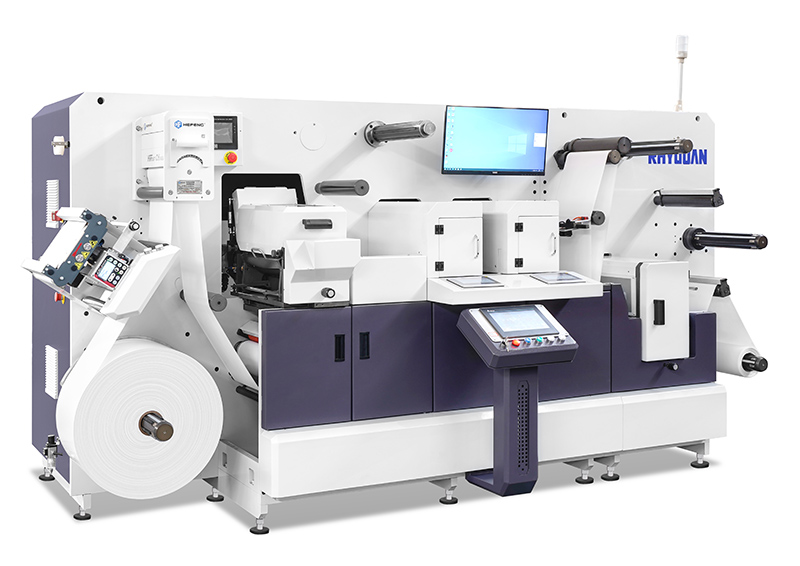
CNC Digital Mold Cutter: Covers almost all conventional mold materials. It performs excellently in processing metal materials including mold steel, copper, aluminum, and cemented carbide, as well as non-metal materials such as resin, wood, and foam. Its only limitation is that soft and sticky materials such as silicone are easy to stick to the tool, resulting in poor processing results.
This is the most critical dimension for mold manufacturers, defining the core application scenarios of the two devices.
Laser Mold Cutter: It is good at 2D plane cutting, thin plate engraving, micro-hole and narrow slit machining. It can achieve extremely fine cutting seams (as narrow as 0.1mm) and sharp corners that are difficult to complete with mechanical tools. However, it is almost unable to complete 3D curved surface and deep cavity machining, and its processing capacity drops sharply for materials thicker than 10mm, with obvious taper on the cutting edge.
CNC Digital Mold Cutter: It is the all-rounder in mold manufacturing, fully competent for 2D plane cutting, 2.5D relief, 3D three-dimensional curved surface, deep cavity machining, and large margin roughing. It has no pressure on thick material processing, and is the absolute main equipment for the main body processing of industrial molds.
Precision is the lifeline of mold manufacturing, and the finish directly affects the subsequent secondary processing cost.
Laser Mold Cutter: It can achieve ultra-high precision of ±0.01mm in thin plate plane machining, with a burr-free cutting edge, and basically no need for secondary grinding. However, it has a heat-affected zone during processing: the high temperature will change the metallographic structure of the mold steel near the incision, resulting in local hardening and brittleness, which will affect the accuracy and service life of the mold in long-term use. For thick materials, its precision will drop significantly, with obvious cutting taper.
CNC Digital Mold Cutter: The conventional machining accuracy is ±0.05mm, and the high-end precision machining center can reach ±0.001mm. It has stable long-term accuracy for large-area, 3D curved surface and thick material processing, no thermal deformation, and no change to the material properties of the mold steel. The only limitation is that the extremely small inner fillet and ultra-fine narrow slit are limited by the tool diameter and cannot be processed, and the finished surface will have tool marks, which requires subsequent grinding and polishing.
For manufacturing enterprises, equipment input, labor cost and production efficiency directly affect the final profit.
Laser Mold Cutter: It has extremely high speed for thin plate plane machining, no need to change tools, and one-time forming. The entry-level equipment has a low threshold, and the consumable cost for thin plate processing is low. Its operation and programming are simple, the learning curve is gentle, and the requirement for the operator's experience is low. However, the power consumption and comprehensive cost of thick material processing will rise sharply.
CNC Digital Mold Cutter: It has an overwhelming advantage in the efficiency of large margin roughing of thick and hard materials, with stable performance in batch processing and lower comprehensive cost for mass production. However, it requires professional programming and machine operation personnel, the process, tool selection and parameter setting have a high threshold, and it is extremely dependent on the experience of the operator. The price span of equipment is extremely large, and the cost of high-end models is much higher than that of conventional laser cutting machines.
After clarifying the differences, we give you clear selection criteria based on the actual needs of mold manufacturing, to help you avoid detours:
Your project is mainly thin plate mold processing (within 10mm), such as blister mold, knife mold, small sheet metal stamping die;
You need to process non-metal molds, such as acrylic mold, wood mold, foam lost foam, silicone mold;
Your core demand is fine auxiliary machining of molds, such as precision cutting of mold inserts, micro-hole and exhaust hole processing, surface texture engraving of molds;
You have small batch production of special-shaped complex plane mold parts, and need to quickly switch materials and patterns without frequent tool change.
You need to process the main body of mainstream industrial molds, such as injection mold, stamping die, die-casting mold, rubber mold, including cavity and core roughing and finishing;
Your project involves 3D curved surface, deep cavity, inclined top structure and other three-dimensional mold processing;
You need to process thick mold steel (more than 10mm), large-size mold formwork, and need high-efficiency large margin material removal;
You focus on mass standardized mold production, and need long-term stable dimensional accuracy and controllable production cost.
In the global precision mold manufacturing industry, these two devices are almost never used as an either-or choice. For the full-process production of high-precision molds, the standard industry process is:
Use the CNC digital mold cutter to complete the roughing of the mold main body and the main milling of the cavity and core;Use the laser mold cutter to complete the precision cutting of inserts, micro-hole processing, and surface texture engraving.
This combination can maximize production efficiency, ensure the overall accuracy of the mold, and avoid the limitations of a single device, which is the choice of most top mold factories around the world.
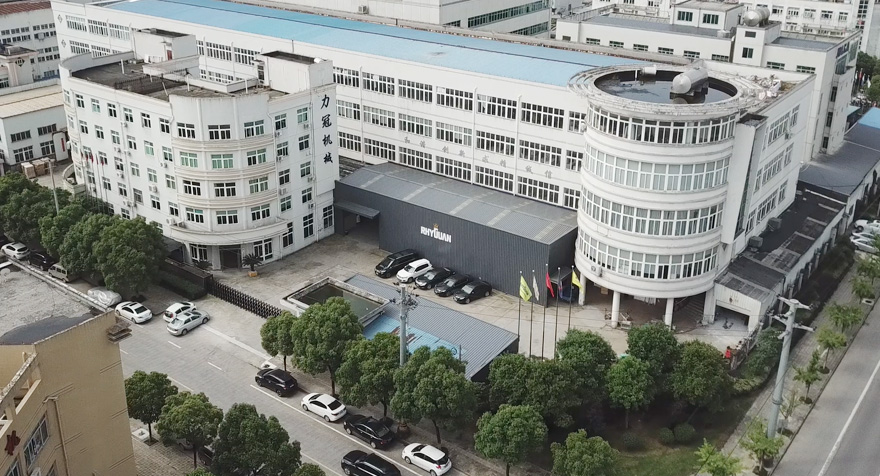
Rhyguan is a leading professional mold machining equipment and solution provider from China, with more than 15 years of industry experience.
Whether you need a single piece of equipment, a full set of mold workshop solutions, or customized advice for your special mold project, our senior engineer team with an average of 10+ years of industry experience can provide you with one-to-one exclusive solutions, helping you optimize production processes, reduce comprehensive costs, and improve product quality and delivery efficiency.
Contact us today for a free project consultation and equipment matching evaluation, and our team will get back to you with a professional solution within 24 working hours.
● Another PLUS-330 Machine Installed in Latin America
● Another Two Installations at Customers’ Site
● Rhyguan Plus Month
● Top security level in Rhyguan
● Another Rotary Die-cutting Installation at Cutsomer’s Site
● Perfect Factory Acceptance Testing for Label Inspection Machines
● New Rhyguan Factory Preview
● Rhyguan Industrial 4.0 Live Presentation
GET A QUOTE