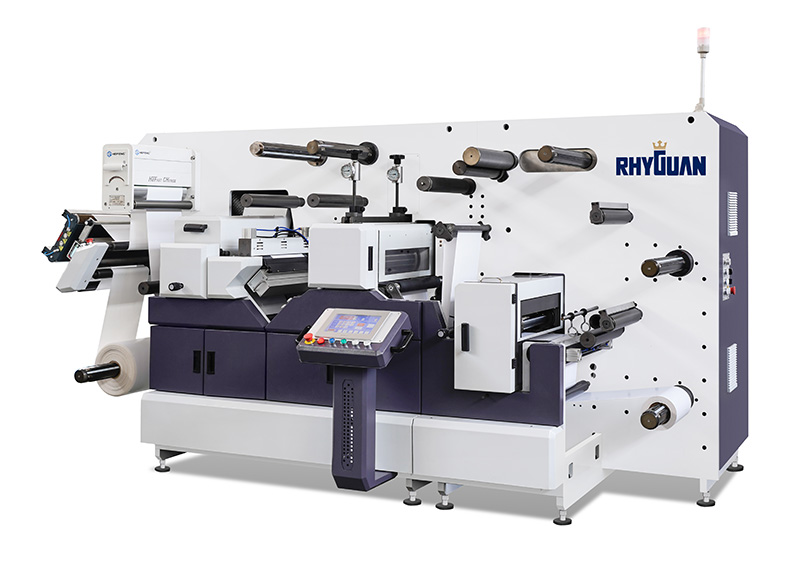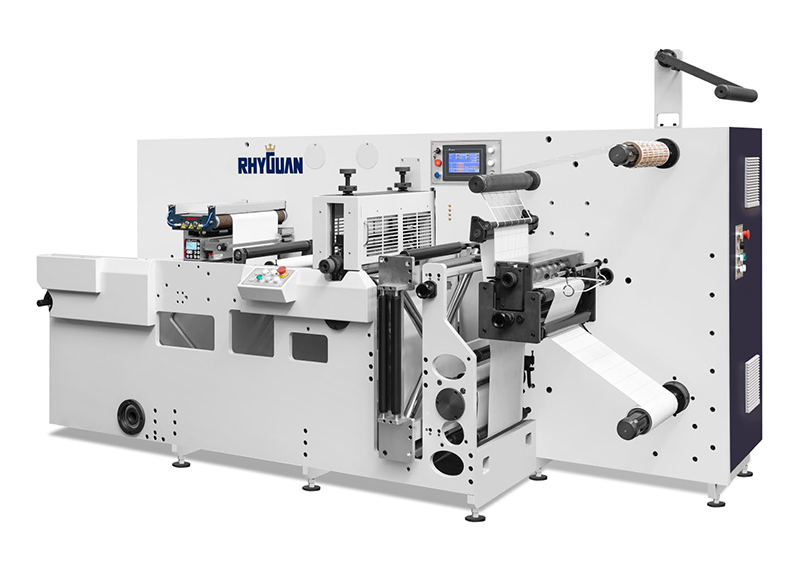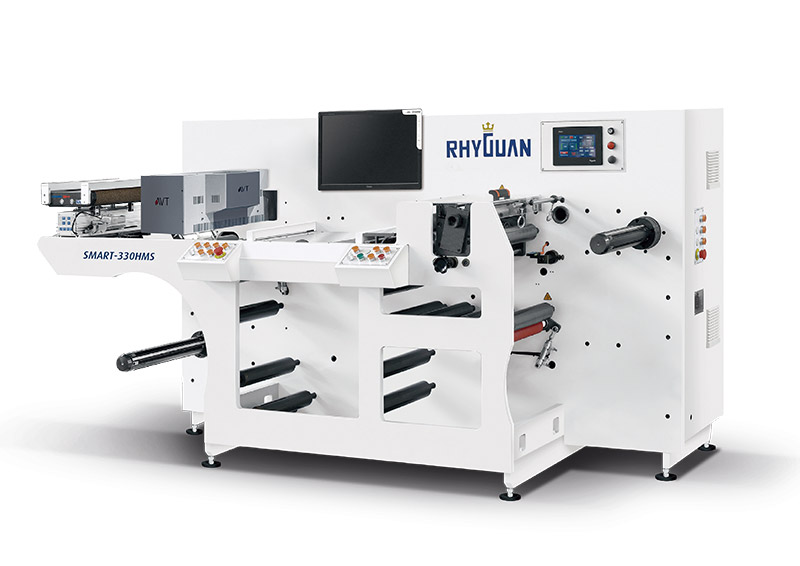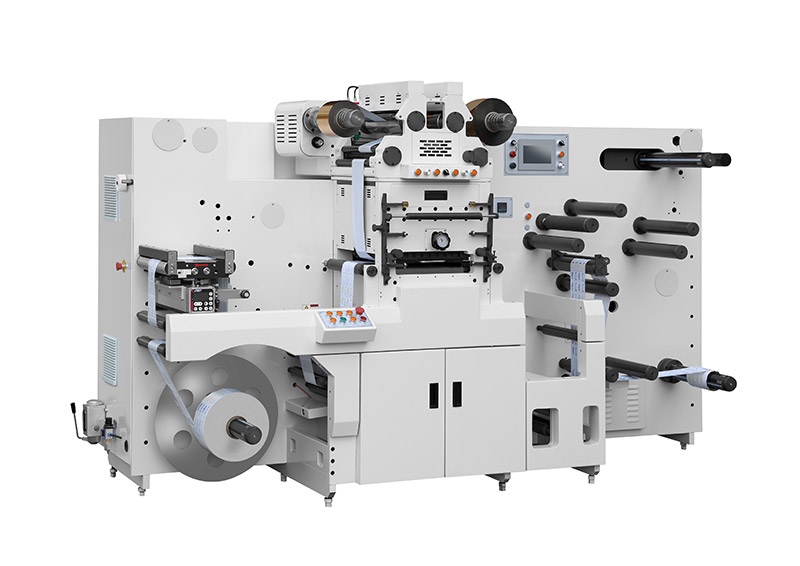
The label finishing equipment market in 2025 is not just growing—it is transforming. Digital adoption, automation, and sustainability are reshaping how label converters think about their post-press operations. But what does the data actually show? And more importantly, what do these trends mean for converters making equipment decisions today?
This article provides a data-driven overview of the 2025 label finishing machine market, examining market size, key growth drivers, digital adoption trends, and the strategic implications for label converters navigating an increasingly complex production landscape.
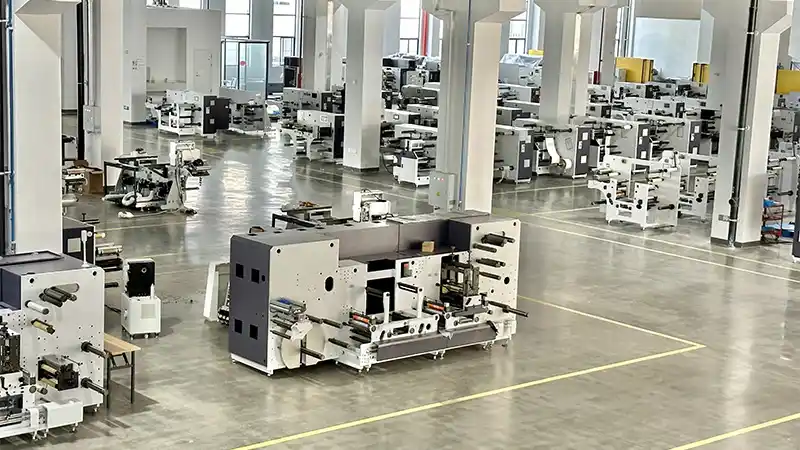
The label finishing equipment market sits within the broader print finishing and converting equipment sectors, and 2025 data points to substantial and growing demand.
The Global Label Converting Equipment Market—which encompasses label printers, die-cutting machines, laminators, and slitters used for converting raw materials into finished labels—was valued at USD 2.2 billion in 2024 and is expected to reach USD 3.5 billion by 2031, growing at a compound annual growth rate of 9.00%.
At the broader print finishing level, the Global Print Finishing Equipment Market was valued at USD 8.27 billion in 2024, with projections to grow from USD 8.56 billion in 2025 to USD 12 billion by 2035, at a CAGR of approximately 3.4%.
Within the finishing segment, Digital Finishing and Embellishment Machines represent a faster-growing sub-category. The global market for digital finishing and embellishment machines was valued at USD 1.24 billion in 2025, with further growth anticipated to reach USD 1.68 billion by 2032, expanding at a CAGR of 4.5%.
| Market Segment | 2025 Value | Projected Value | CAGR | Forecast Year |
|---|---|---|---|---|
| Label Converting Equipment | USD 2.2B (2024) | USD 3.5B | 9.00% | 2031 |
| Print Finishing Equipment | USD 8.56B | USD 12B | 3.4% | 2035 |
| Digital Finishing & Embellishment | USD 1.24B | USD 1.68B | 4.5% | 2032 |
These figures indicate a market that is both large and expanding, with the label converting segment growing at a particularly strong pace—nearly triple the CAGR of the broader print finishing market.
For label converters evaluating finishing equipment, understanding how these market dynamics translate into equipment capability requirements is essential. See how modern label finishing solutions are designed for current production demands.
Digital technology is the single most important force reshaping the label finishing equipment market. The numbers tell a compelling story.
The global market for digitally printed packaging and labels reached USD 22.0 billion in 2025, according to Smithers research. Within this, digital label printing alone is valued at USD 12.3 billion in 2025 and is projected to grow to USD 20.6 billion by 2035 at a CAGR of 5.3%.
Digital now accounts for 23.3% of the label segment by value—a striking achievement for a technology that was considered niche just a decade ago. In 2025 alone, digital presses will print around 103 billion A4 prints of labels, split equally between inkjet and toner.
Globally, there are now over 8,100 narrow-web digital presses in operation, with nearly 1,150 new digital label presses sold in 2025.
What does this mean for finishing equipment? Every new digital press produces labels that must be finished—die-cut, varnished, foiled, slit, and rewound. But digital printing changes the finishing equation in three critical ways:
Shorter runs: Digital presses excel at short-run production, which means finishing equipment must handle more frequent job changes with minimal setup time.
More SKUs: Brand owners increasingly demand multiple versions and personalization, driving SKU proliferation.
Inline integration: As press speeds have increased, label converters have begun moving toward integrated or near-line finishing.
The digital transformation of label printing is therefore a primary driver of demand for advanced, automated, and flexible finishing equipment.
For converters already running digital presses, understanding how finishing equipment integrates with digital workflows is a critical consideration. Explore label inspection and finishing solutions designed for digital production.
Labelexpo Europe 2025—the industry's premier event—showcased a label industry in transition, driven by three core forces: sustainability, automation, and hybrid printing.
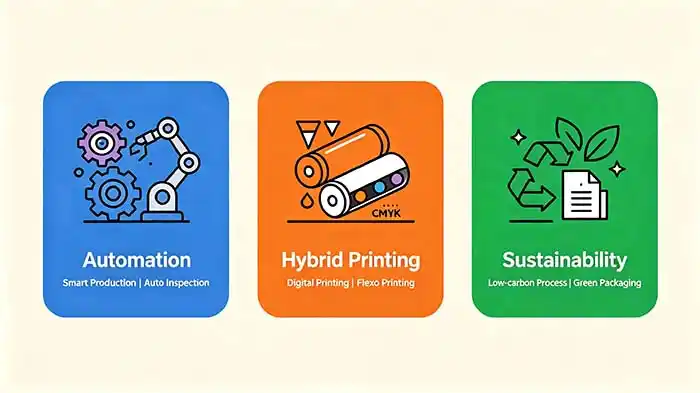
Automation has become one of the hottest trends in the label and package printing industry. Tasks that previously required manual effort—slitting, rewinding, die-cutting, and embellishment—can now be carried out more quickly, accurately, and with less waste.
The data supports this shift. Inline presses that integrate die-cutting, lamination, and inspection are expected to grow at a rate of 9.56% annually, the fastest among product types. By eliminating offline steps, these integrated systems reduce labor costs, minimize handling damage, and accelerate time-to-market.
Automation is not merely a convenience—it is becoming a competitive necessity. As FINAT stated at the European Label Forum 2025: "Innovation is not a luxury; it's the lever for survival and success".
Hybrid printing—combining digital and conventional (flexo) printing in a single pass—is emerging as a game-changer for label converters. Hybrid systems break traditional printing workflow patterns due to inline finishing, rapid changeovers, and shorter runs that do not compromise efficiency.
The hybrid printing market is projected to grow by USD 17.83 billion at a CAGR of 13.14% by 2032. By combining digital print with flexo and converting modules, hybrid presses reduce plate requirements, cut prepress labor, and minimize work-in-process inventory.
For finishing equipment manufacturers, the rise of hybrid printing means increased demand for modular, flexible finishing solutions that can be integrated inline with both digital and conventional print engines.
Sustainability concerns are shaping technology choices across the label industry. Converters are increasingly investing in equipment that enables the production of recyclable and biodegradable labels.
Key sustainability trends include:
Increased uptake of water-based laminates and lower-emission coatings
Waste-reducing finishing platforms that align with corporate ESG goals
Growing demand for eco-friendly packaging solutions
The global labels and release liners market is projected to be worth USD 47.17 billion in 2025, with a CAGR of 3.6% through 2030. As this market grows, so does the pressure on converters to adopt sustainable production methods—and the equipment that enables them.
The label finishing equipment market shows distinct regional patterns that influence investment decisions.
Asia-Pacific is a prominent market due to the growing manufacturing sector in countries like China and India. The region is rapidly expanding digital finishing capacity to meet e-commerce-driven demand. In China, the digital packaging and label printing machine market grew 9.3% year-over-year in the first half of 2025 to RMB 830 million.
North America is projected to lead the print finishing equipment market due to the strong presence of leading printing technology companies and high adoption rates of innovative finishing solutions. The region also faces unique pressures, including recent tariff schedules that have increased import costs and prompted a shift toward alternative suppliers.
Europe, Middle East & Africa (EMEA) emphasizes regulatory compliance and premium quality. The European market for RFID labels is expected to reach €2.5 billion by 2027, driven by stricter regulations on labeling and traceability.
| Region | Key Characteristics |
|---|---|
| Asia-Pacific | Fastest-growing; e-commerce driven; expanding digital capacity |
| North America | High adoption of innovative finishing; tariff pressures |
| EMEA | Regulatory focus; premium quality; RFID growth |
For label converters evaluating finishing equipment investments, the 2025 market data and trends point to several strategic implications:
1. The payback period is under pressure. Printing United Alliance reports that 58.6% of converters deferred purchases in 2025 because payback periods exceeded five years. This suggests that equipment manufacturers must demonstrate clear, quantifiable ROI—particularly through automation and waste reduction.
2. Modularity is becoming essential. The automatic post-printing finishing equipment market is advancing toward greater connectivity, modular design, and sustainable capabilities. Modular machine design offers scalable solutions, enabling flexible responses to fluctuating print volumes without extensive retooling.
3. Inline integration is accelerating. As digital press speeds increase, finishing equipment must keep pace. Converters are moving toward integrated or near-line finishing to eliminate bottlenecks. Inline systems that combine multiple finishing processes in a single pass are becoming the new standard.
4. Digital finishing is the fastest-growing segment. With digital label printing valued at USD 12.3 billion in 2025 and growing, the demand for digital finishing equipment will continue to outpace traditional finishing. Converters who delay investment in digital finishing capabilities risk losing market share to more agile competitors.
For converters who have assessed their production requirements and growth trajectory, evaluating specific finishing equipment configurations is the logical next step. Review digital finishing and converting solutions designed for label production.
The data points to continued growth through the remainder of the decade:
The global label converting equipment market is expected to reach USD 3.5 billion by 2031 at a 9.00% CAGR
The digital packaging and label market is forecast to grow from USD 22.0 billion in 2025 to USD 36.9 billion by 2030 at a 10.9% CAGR.
The digital finishing and embellishment machine market is projected to reach USD 1.68 billion by 2032
While digital label growth is expected to be the slowest among packaging segments at an 8.0% CAGR (2025-2030), this reflects the sector's maturity—label printers are already well along the digital adoption curve. The finishing equipment that supports digital label production will continue to be a primary growth driver.
For label converters, the message is clear: the finishing equipment market is growing, digitizing, and automating. Those who invest strategically—focusing on modularity, automation, and digital compatibility—will be best positioned to capture the opportunities ahead.
How to Choose Between Modular and Integrated Digital Finishing for Your Label Shop
The ROI of Automation in Label Finishing: A Data-Driven Analysis
Understanding the Digital Label Printing Market: Trends and Forecasts
Sustainability in Label Finishing: Equipment Choices That Reduce Waste
Regional Label Market Outlook: Asia-Pacific, North America, and Europe Compared
This article is part of Rhyguan's technical content library. No direct sales or pricing information is included. All technical discussions aim to help you make informed purchasing decisions.
● Another PLUS-330 Machine Installed in Latin America
● Another Two Installations at Customers’ Site
● Rhyguan Plus Month
● Top security level in Rhyguan
● Another Rotary Die-cutting Installation at Cutsomer’s Site
● Perfect Factory Acceptance Testing for Label Inspection Machines
● New Rhyguan Factory Preview
● Rhyguan Industrial 4.0 Live Presentation
GET A QUOTE